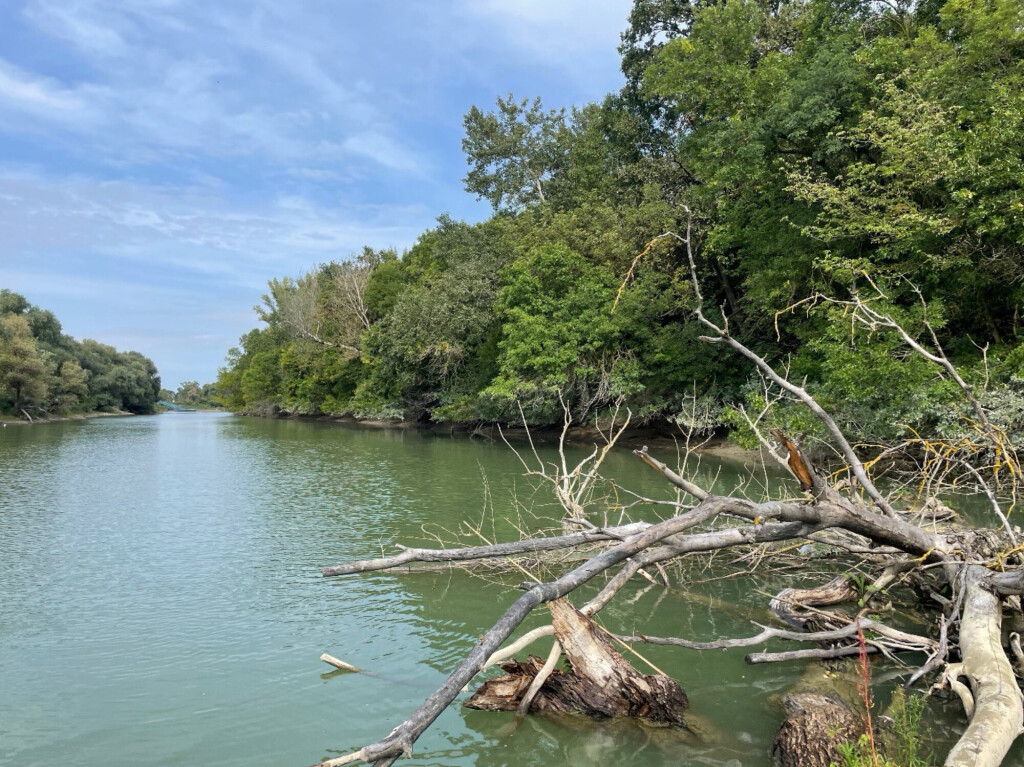
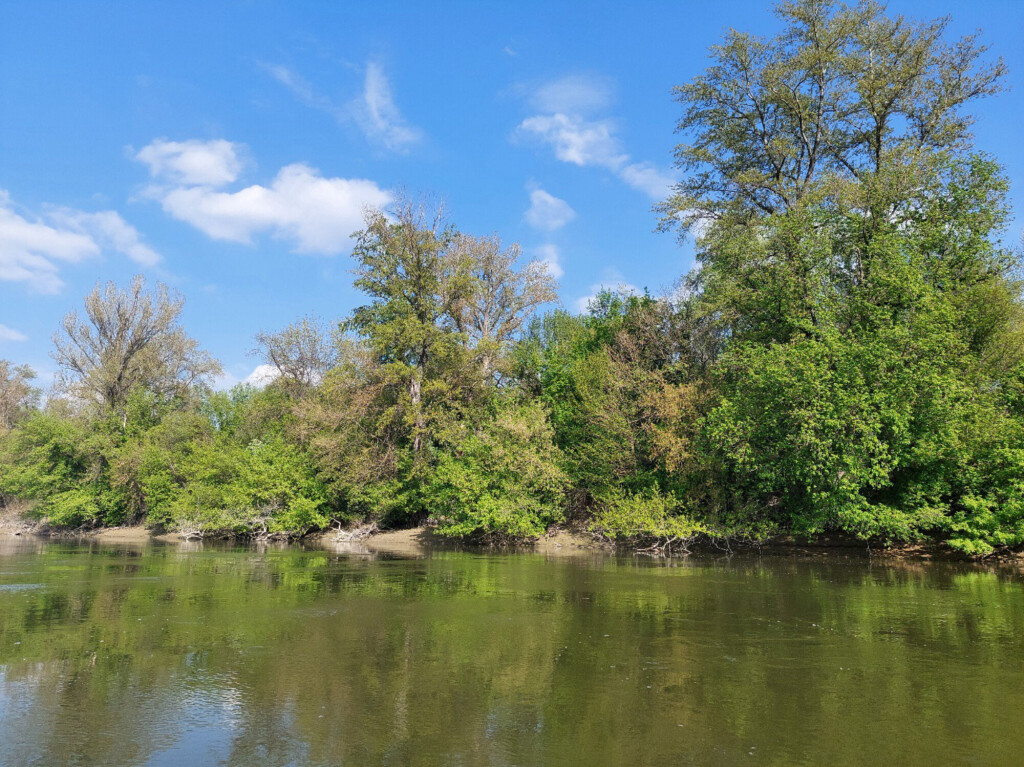
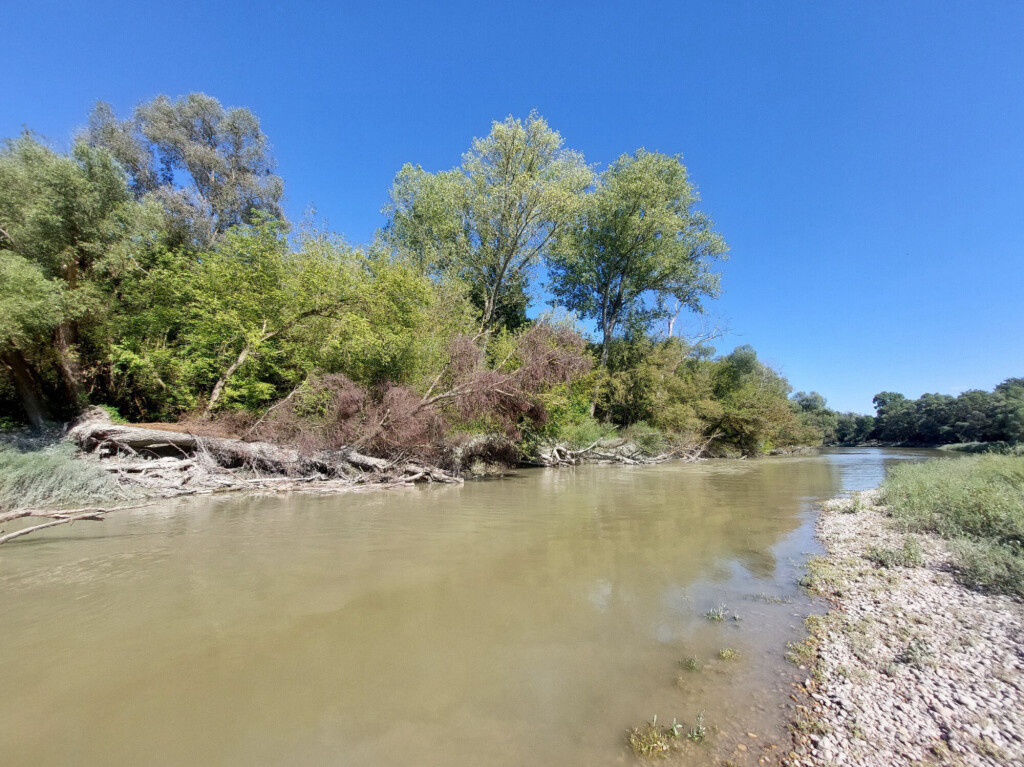
A new scientific study provides strong evidence that the side channels surrounding river islands are among the most important habitats for fish in the Hungarian section of the Danube. The findings also provide valuable scientific support for DANUBElifelines, where restoring lateral connectivity and helping fish return to disconnected sidechannels is one of the project’s key objectives.
The research was carried out by scientists from the HUN-REN Balaton Limnological Research Institute, a core partner in DANUBElifelines, in cooperation with the Danube-Ipoly National Park Directorate, an associated partner in the project. The team investigated side channels connected to three large river islands in the Middle Danube and compared them with the main river channel.
More than secondary habitats
The results show that these calmer, shallower and structurally more diverse side channels support at least as many fish species as the main channel, while several species were found only in the side channels.
Differences in flow velocity, substrate composition and aquatic vegetation create a mosaic of habitats that shapes both the taxonomic and functional diversity of fish communities.
According to the authors, river islands and their side channels act as biodiversity amplifiers in large regulated rivers. Rather than being secondary habitats, they provide shelter, feeding areas and nursery grounds for fish and many other aquatic organisms, while increasing the overall ecological resilience of the river.
From research to restoration
This is particularly relevant for DANUBElifelines. The project is investigating how fish recolonise side channels once water returns after the record droughts that have affected large parts of the Danube region.
By linking hydro-morphological diversity with fish diversity, the study provides a scientific foundation for future restoration efforts across the Danube Basin. It shows why restoring connections between the main river, islands and side channels matters: these different habitats together support a more diverse and resilient river ecosystem.
The findings also support the objectives of the EU Nature Restoration Regulation, which promotes the restoration of degraded river habitats and the re-establishment of natural hydrological connections. Restoring island–side-channel systems can therefore be a practical, locally implementable step towards healthier and more resilient Danube ecosystems.
For DANUBElifelines, the message is closely connected to what the project is working towards: restoring river connectivity and letting the fish back to the Danube.
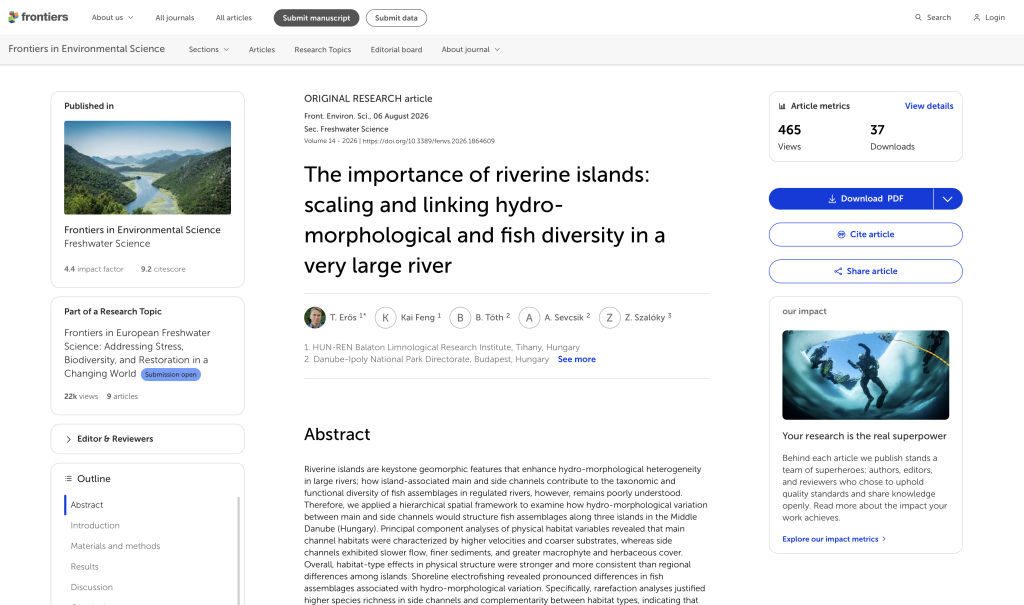
The conservation of Danube river islands and their connected side channels is of key importance for preserving the biodiversity of aquatic and riparian ecosystems (photo credit: Tibor Erős).