Climate change affects everything: the environment, rivers, and people. Hardly a year goes by without water-related problems – one year we face floods, the next we suffer from water scarcity. In Slovenia, the 2023 floods were a warning. The severe drought the year before once again revealed the consequences of long-term mismanagement of water resources, inadequate spatial planning, and the lack of coordination between the two. With climate change accelerating, the outlook does not seem promising. But could it be different?
It could.
In the past, people adapted to the laws of nature. Rivers were understood. On the one hand, they were used for mills and sawmills; on the other, settlements were built outside their channels. People knew that rivers need space and that living within floodplains makes little sense. Since the 19th century, however, water management has been based on a doctrine of controlling and subjugating nature. With industrial development, humans sought to dominate nature as well. Rivers were regulated, straightened, and confined by embankments. Our parents believed that wild rivers had been tamed and that a peaceful future was secured – one in which water could be used according to human needs, without the risk of floods or shortages.
Do the experiences of the past 100 years support this belief?
Quite the opposite. Experience shows that the impacts of both floods and droughts are becoming increasingly severe. How is this possible when millions of euros are invested every year in maintaining watercourses and constructing flood protection infrastructure? The answer is complex, just as nature itself, but at its core, it is simple. Today, science understands water systems far better than it did a century ago.
The straightening, shaping, and maintenance of uniform river channel profiles, the reinforcement of banks with stone and concrete, the construction of embankments and retention reservoirs, and the removal of riparian vegetation are collectively referred to as river regulation (hydromorphological alteration). The replacement of green areas with hardened, asphalted surfaces and the construction of stormwater drainage systems are part of spatial planning. Today, experts from various disciplines agree that through both river regulation and misguided spatial planning—particularly the settlement of floodplains—we have fundamentally disrupted the natural balance of aquatic ecosystems, thereby causing both droughts and floods ourselves.
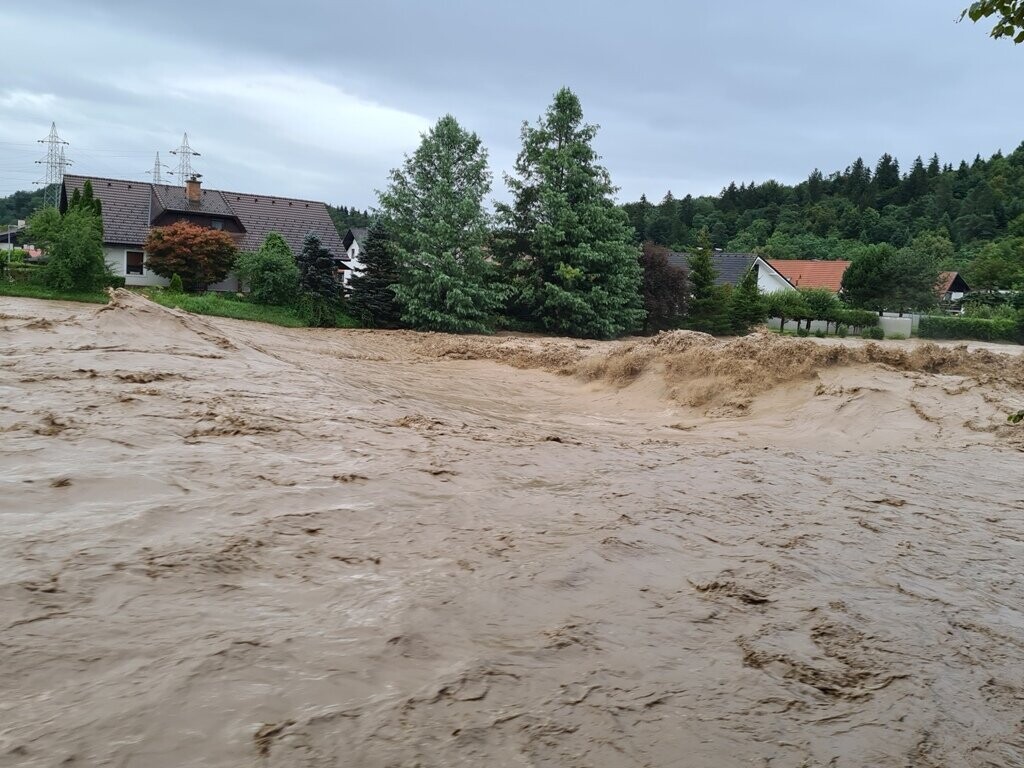
The message is simple: natural rivers change. It is their essence, their defining characteristic, and the foundation of life within them. Without continuous change, they are no longer rivers and cannot sustain life. When rivers are confined by concrete and regulations, they become mere drainage channels—lifeless, yet highly unpredictable.
Rivers change in different ways. Scientifically, we say they have four dimensions: longitudinal (flowing from source to mouth), lateral (connected to floodplains), vertical (exchanging water with groundwater), and temporal (changing with the seasons). Only the combination of all four dimensions allows river ecosystems to function fully, and at the same time provides humans with safe, high-quality living conditions. One might even say: survival. That is why rivers deserve to be understood better.
The Longitudinal Dimension
The first dimension describes changes from source to mouth – the longitudinal dimension. This is likely the easiest to understand, as it is the most visible. In headwaters and mountainous sections, flow velocity is high, water is rich in oxygen due to rapids, and the riverbed is covered with large boulders and rocks. Species inhabiting these environments are adapted to strong currents, either through powerful swimming abilities or streamlined body shapes. These include fish and aquatic invertebrates adapted to low temperatures and high oxygen concentrations. Without such conditions, they cannot survive.
These sections correspond to the trout zone and to reaches dominated by shredders. What are the shredders? Aquatic plants and algae cannot thrive here due to fast currents and coarse substrates, so primary production is minimal. The only available energy enters the river from the surrounding riparian vegetation. Leaves, flowers, branches, bark, and even whole tree trunks fall into the river and serve as the main energy source. Shredders are insect-like organisms that feed on coarse plant material, breaking it into smaller particles. These are then further decomposed by microorganisms downstream, releasing nutrients.
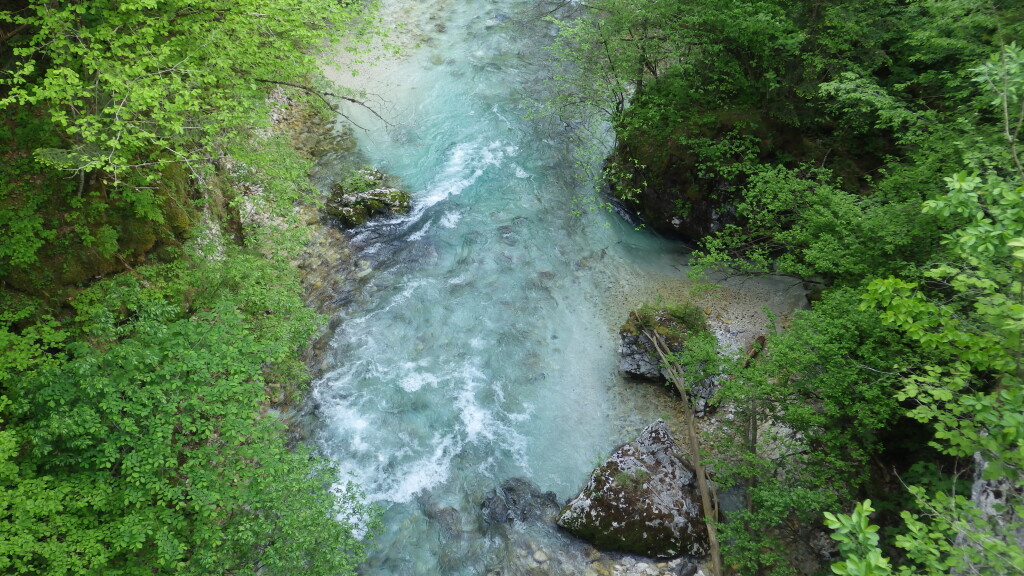
Despite constant change, the longitudinal dimension follows predictable patterns. The fundamental structural elements of river channels are meanders. These can be imagined as endless snakes slowly moving toward the sea. Meanders are not static; they are shaped by sediments transported downstream, which erode exposed banks and are deposited where flow velocity decreases.
Sediment transport, driven by flow velocity and channel morphology, creates a mosaic of habitats. Periodic changes in discharge are essential for this diversity. Within each meander, alternating pools and riffles form. During high flows, erosion on the outer bend creates deep pools, while slower flow on the inner bend deposits finer sediments, forming gravel bars. At the exit of the bend, deposited stones create riffles that oxygenate the water and help maintain water levels in pools.
The Lateral Dimension
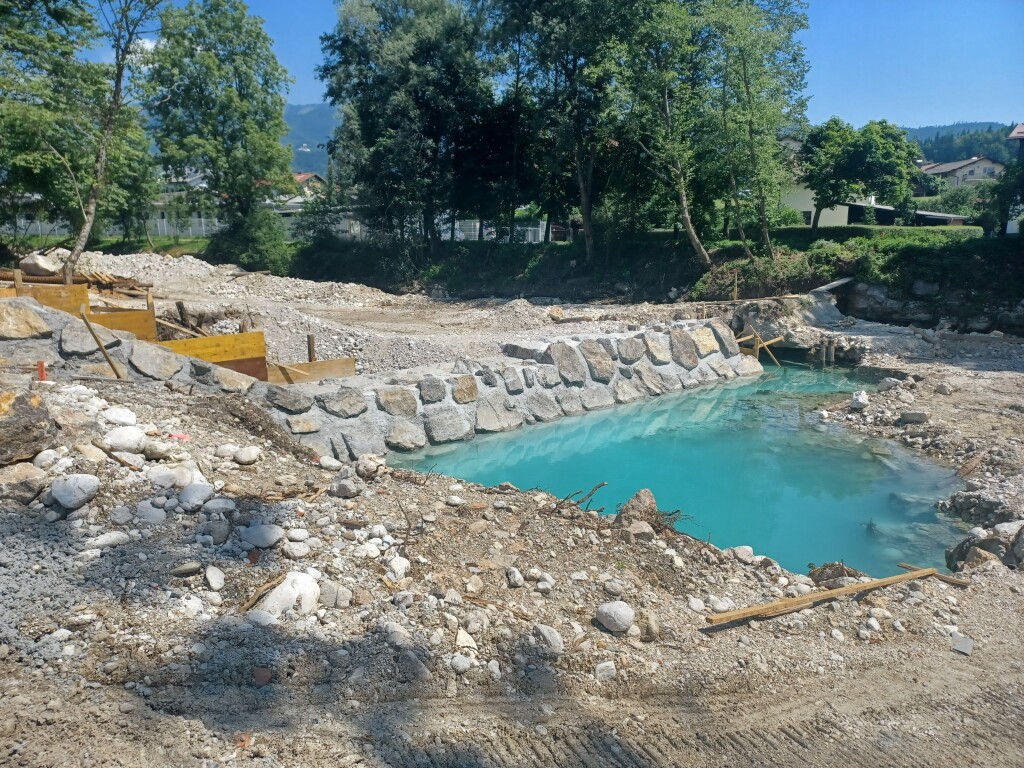
The lateral dimension describes changes from the main channel to the floodplain. A river is not only the water channel; it includes gravel bars, vegetated banks, and floodplains – areas inundated during floods. Together, these elements form the river corridor, which shapes the surrounding landscape.
In natural systems, intense exchanges of matter and energy occur between the channel and the floodplain. During floods, excess water spreads across floodplains, infiltrates soil and groundwater, and is slowed down by riparian forests. Vegetation reduces flow velocity, promotes infiltration, shades the water, and reduces evaporation. Floodplains thus recharge the two largest water reservoirs we have: soil and groundwater.
During dry periods, this stored water slowly returns to the river through the banks and the riverbed, sustaining flow and cooling the river during summer heat. Riparian vegetation also acts as a bidirectional living filter, retaining nutrients within the channel while trapping pollutants from the surrounding catchment.
The Vertical Dimension
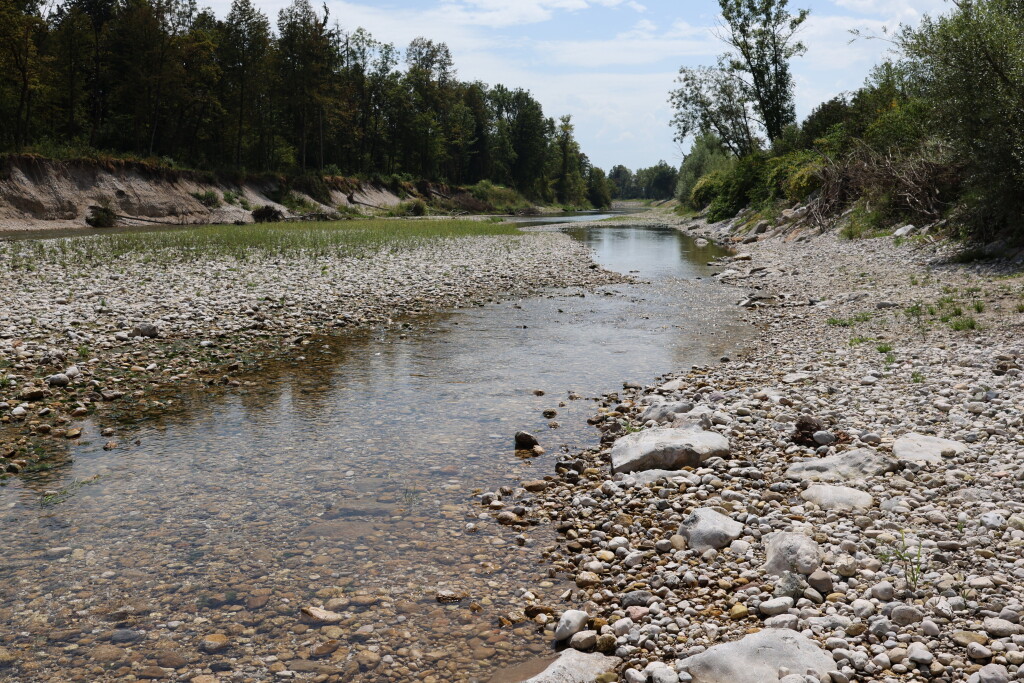
The vertical dimension represents exchanges between surface water and groundwater. Contrary to common belief, riverbeds are not impermeable. Water continuously infiltrates through sediments, filtered by gravel and sand layers inhabited by microorganisms that break down organic matter. This process plays a key role in natural water purification and helps secure clean drinking water.
The Temporal Dimension
The fourth dimension is temporal. Floods and droughts recur seasonally. Vegetation follows annual cycles, and temperature changes influence metabolic processes. These periodic changes act as behavioural triggers of aquatic organisms. Fish migrate, reproduce, or seek refuge depending on water temperature and flow conditions.
River regulation, flow control, and floodplain settlement have disrupted these processes. Instead of retaining water in the landscape, we drain it as quickly as possible. Straightened channels are shorter and carry less water. Concrete-lined banks without vegetation cannot absorb energy during floods. Without floodplains, water has nowhere to spread, leading to increasingly severe flooding. And when summer arrives, water reserves are depleted.
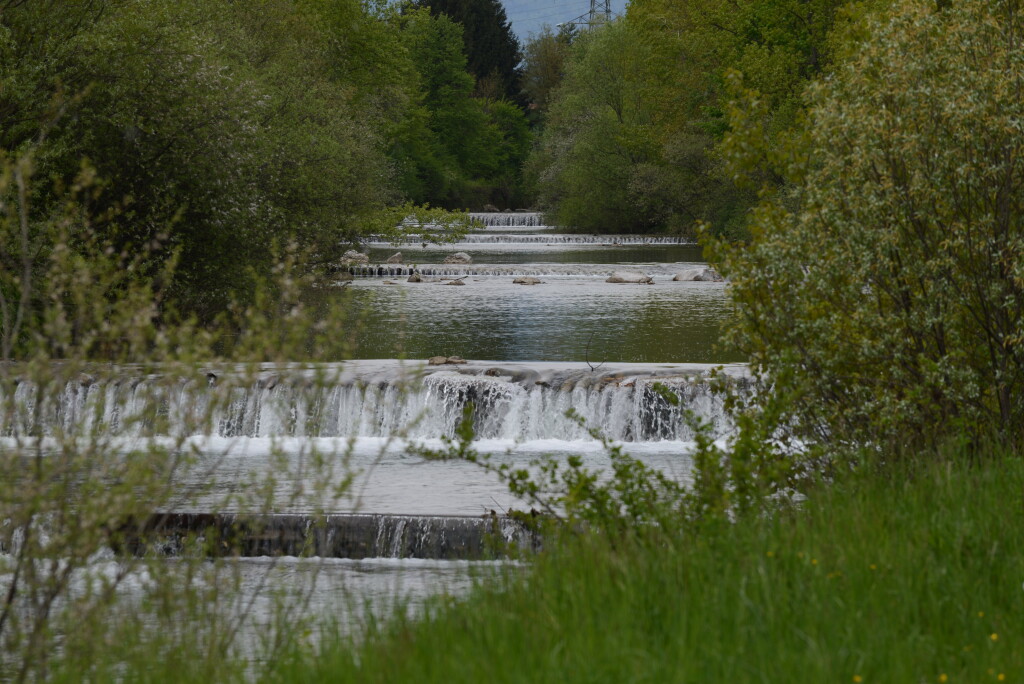
The consequences extend beyond human society. Meanders have been erased, riffles replaced by weirs and dams, and pools filled in. Behavioural cues essential for aquatic organisms have been disrupted, leading to population declines and extinctions. Scientists report that freshwater ecosystems are disappearing three times faster than terrestrial ones. Since the 18th century, 90% of wetlands have been lost. One-third of freshwater species are threatened with extinction, and populations of freshwater vertebrates have declined by 84% since 1980.
This alarming reality demands immediate action.
Fortunately, the solution is simple, although it requires a fundamental shift in our relationship with nature. The concept of sustainability truly implies restraint and long-term viability. If we fail to act voluntarily, adaptation will be imposed by natural limits.
Adaptation is already visible worldwide through river restoration projects carried out over the past 20 years. The goal is not to recreate historical conditions, but to restore processes that allow ecosystems to function independently. The key measure is clear: give nature space.
The UN and the EU have declared 2020–2030 the Decade on Ecosystem Restoration. The EU has adopted the Nature Restoration Law, committing member states to specific restoration targets, supported by substantial funding and legal obligations.
The opportunity is now. Through DANUBElifelines, we contribute to building the knowledge and cooperation needed to restore healthy, functional rivers across the Danube River Basin.
