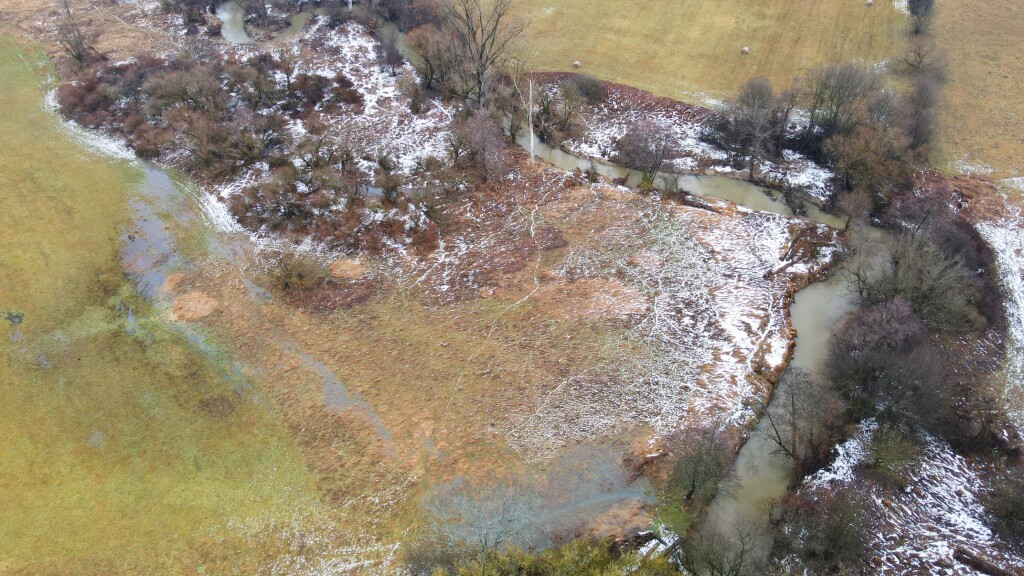
Most rivers in Slovakia have forgotten how to be rivers. Straightened, dredged, and pinned between concrete banks, they run in tidy lines to wherever we decided they should go. The Ipoly, on a bend between Breznička and Kalinovo, still remembers. It wanders, floods its meadows each spring, and carries on much as it has for centuries. Thisis what a river looks like when it is simply left to be one.
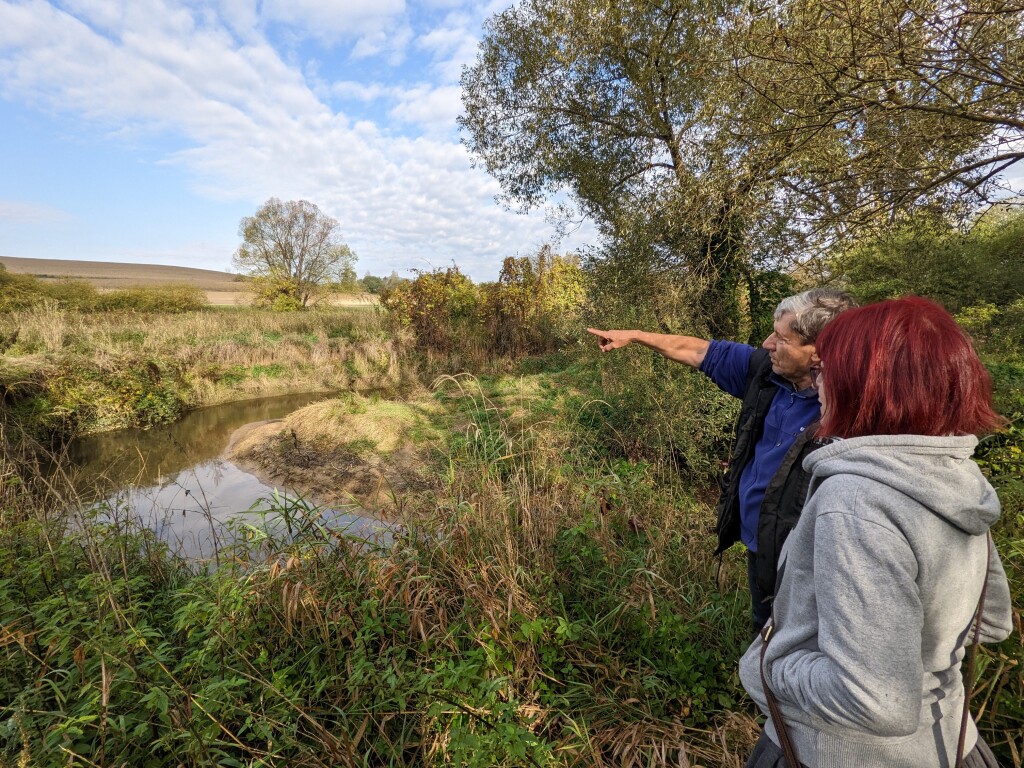
Ján Gábor understood that long before most people did. He grew up on the Ipoly, fished its pools as a boy, and knew its bends by heart, and somewhere in his childhood he decided this river was worth keeping. Most people would have let a thought like that fade. He held on to it for the better part of fifty years, through a whole career as anengineer, and when he retired he finally set out to make it real.
He did it the hard way. Together with a few neighbouring landowners, he bought land plot by plot, sorted out inheritance and tangled ownership, and put years and a good deal of his own money into turning a floodplain into something the state would formally protect. Since July 2026 it has been a protected area, close to thirteen hectares, and the first private reserve in Slovakia created purely to keep a river alive. Access stays free, all year, for anyone who wants to walk the banks or fish, exactly as Gábor did as a boy.
What is actually protected
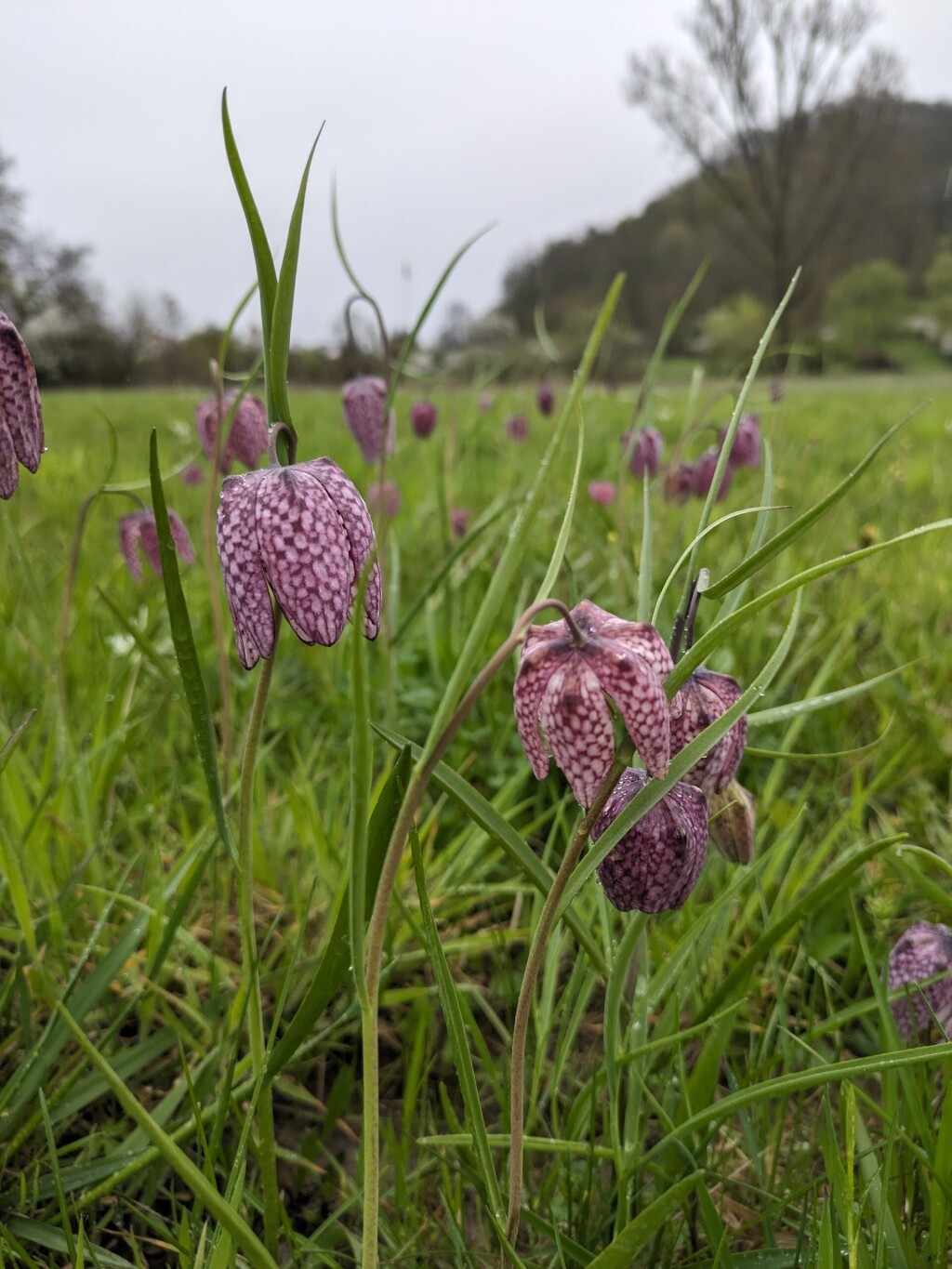
The reserve is not wilderness in the postcard sense. Most of it is wet meadow that has to be mown, because if you leave it, nettles and coarse grasses take over and the rare plants vanish underneath. One of those plants is the snake's head fritillary (Fritillaria meleagris), a chequered pink-and-white flower that has disappeared from most of the country and still comes up here every spring. The river itself is alive in a way few Slovak rivers still are: otters and beavers work the banks, native fish hold in the pools, and the wet alder forest along the water is left completely alone so it can develop on its own terms.
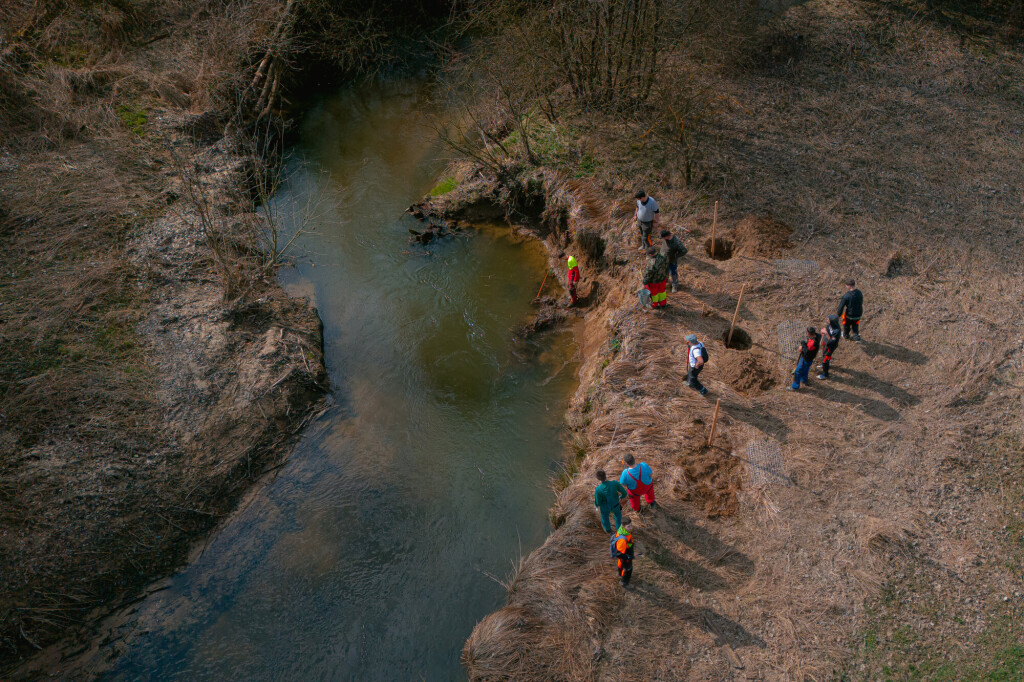
He did not carry the whole thing alone. The administrative side, the expert surveys, the formal proposal, and the long march through cadastral offices and ministries would have sunk most people. WWF Slovakia, a partner in DANUBElifelines, stepped in to help him through it, and still supports the ongoing care of the meadows and the river.
Why he is a local hero
What makes Gábor a local hero is simple. He knows this river the way you only can if you grew up on it: which bank floods in November, where the fritillaries come up in April, what it is all worth. He cared enough to act on that, and he was stubborn enough to turn it into years of land deals and paperwork and see it through to the end. People like him are rare, and a river needs them. That is why, for DANUBElifelines, he is a local hero.
Gábor is not finished. There is a formal opening still to come, boundaries to mark, and plans to bring water back into the floodplain so it holds instead of drains. But the hard part is done. One man decided, fifty years ago, that his river deserved to stay wild, and then he made sure it would.
