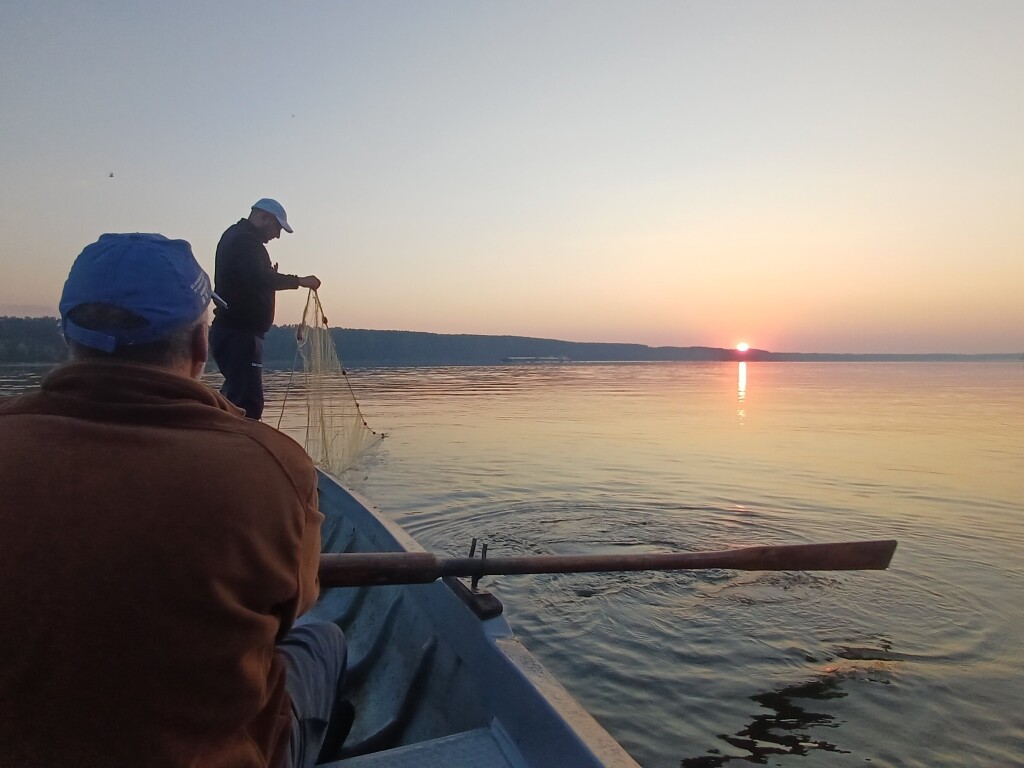
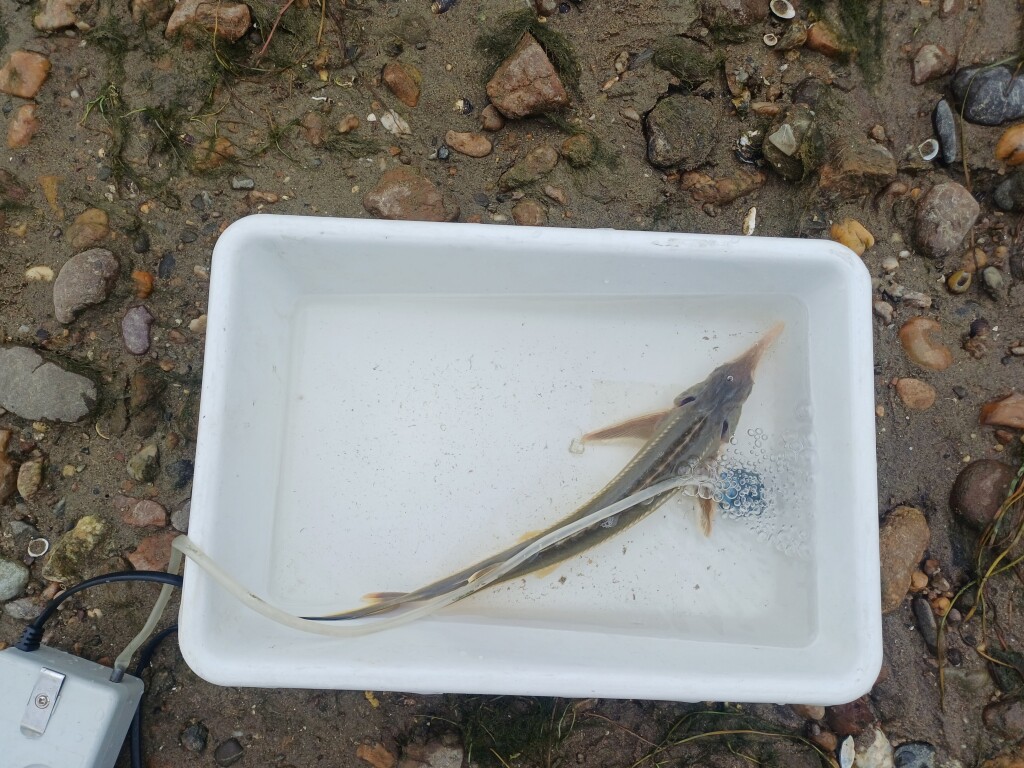
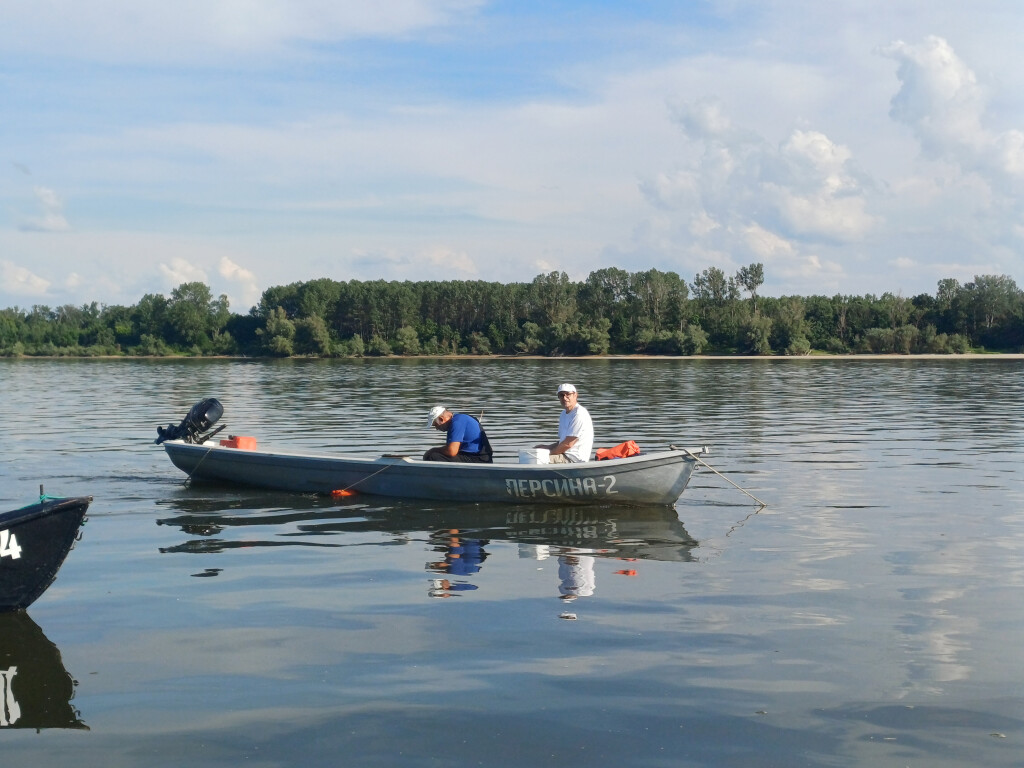
In July, the WWF Bulgaria team carried out field work at our Danube III demo site, following the methodology developed within the project. Two locations along the Bulgarian-Romanian section of the river were selected to assess habitats of sturgeons and Pontic shad: Belene and Gomotartsi.
What was sampled
At both locations, the team collected samples of macrozoobenthos and riverbed substrate, and measured physicochemical parameters including pH, dissolved oxygen and water temperature. The macrozoobenthos and substrate samples will now be processed in laboratories in Germany and Austria.
A sonar survey was conducted at a potential sturgeon spawning site near Gomotartsi, and a similar survey is planned for Belene. The aim is to assess the environmental characteristics of potential spawning habitats for sturgeons and Pontic shad.
Fish monitoring
Fish monitoring was carried out using different types of nets. Bottom-set gillnets were used to monitor sturgeons, while ichthyoplankton nets were deployed to collect Pontic shad eggs.
Results
At Gomotartsi, the team caught 19 adult sterlets and one Russian sturgeon. The Russian sturgeon was identified as an individual released during the restocking in May. No young-of-the-year (0+) sturgeons were recorded.
Results from the Pontic shad monitoring are not yet available, as the samples are still being processed. They will be presented in a separate news update once the analysis is complete.