Standing beside the River Inn, the water appears to follow a continuous and natural course through the landscape. Beneath the surface, however, every change in water depth, velocity, direction and river morphology shapes the routes available to migratory fish.
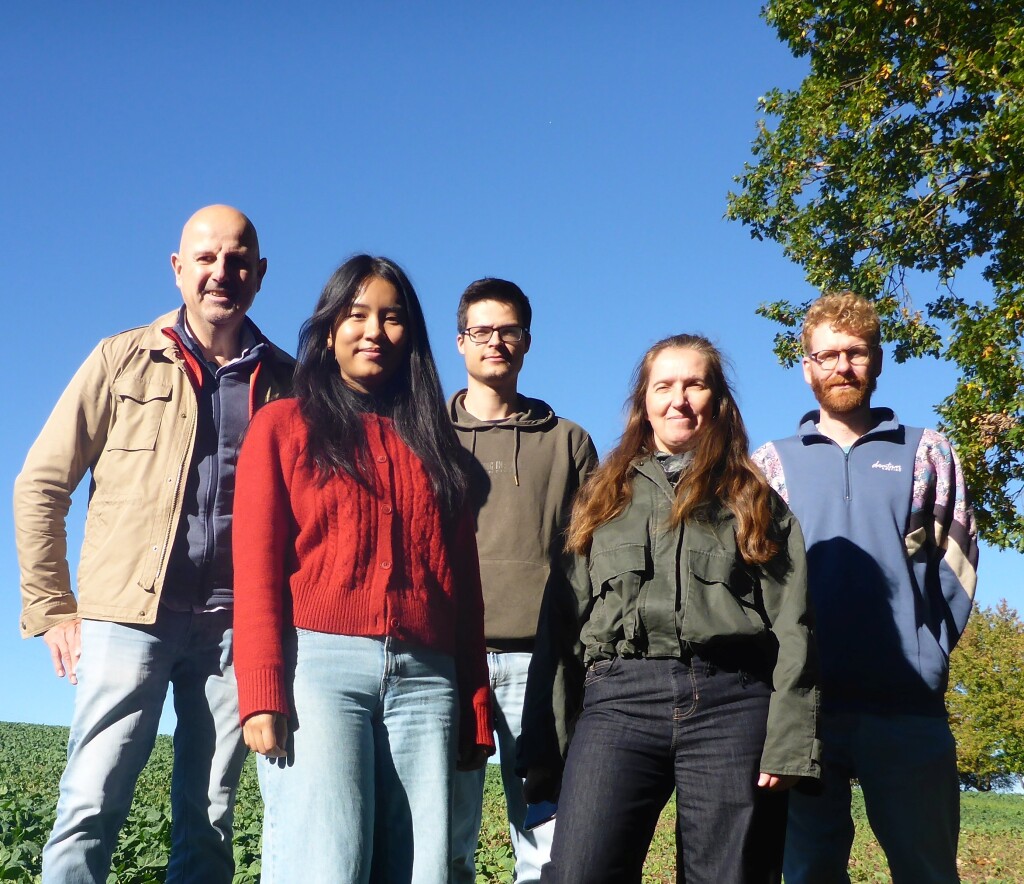
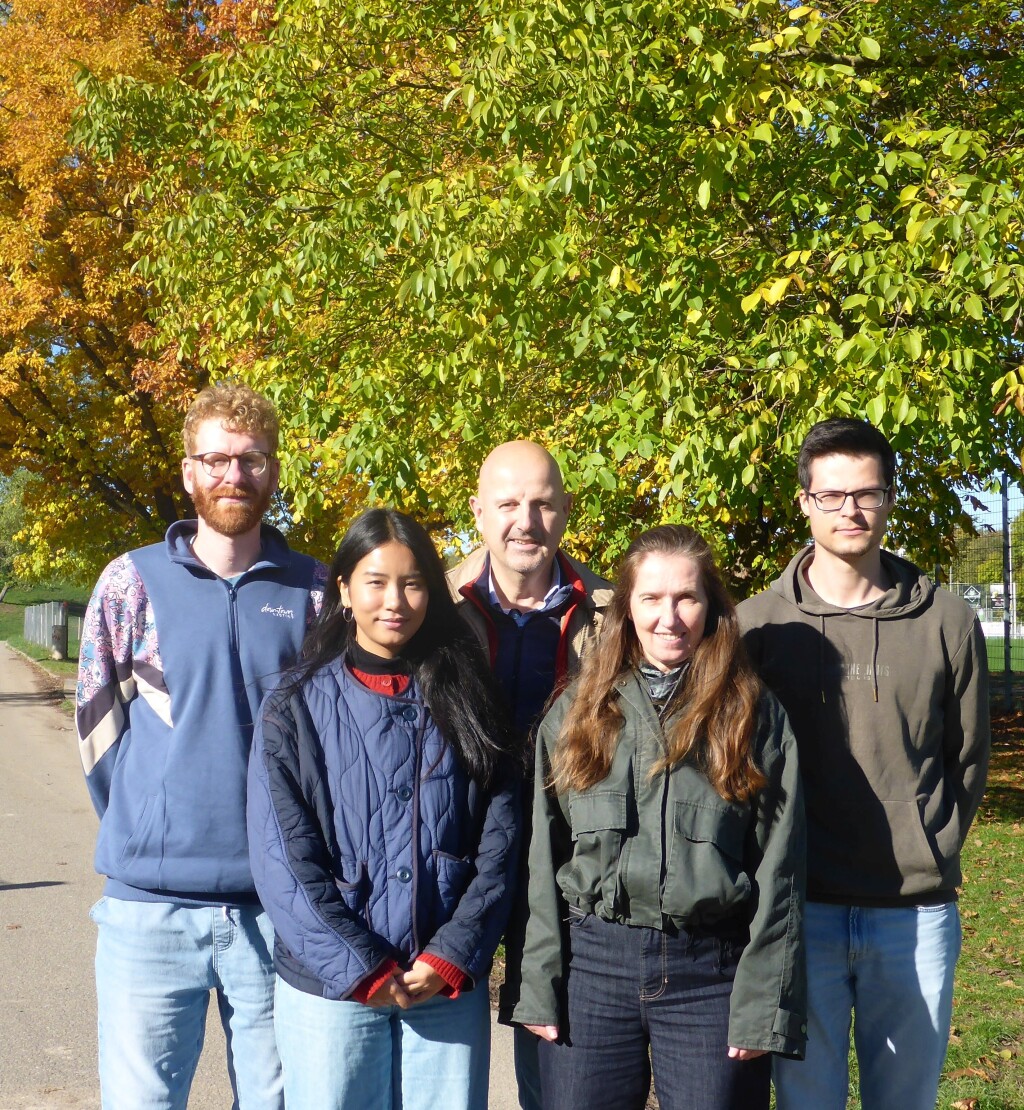
For fish migrating upstream or downstream, rivers form dynamic networks of pathways shaped by bathymetry and flow conditions, habitat quality and hydraulic structures. Understanding these complex interactions lies at the heart of the work of a German engineering company SJE Ecohydraulic Engineering GmbH (SJE). Its interdisciplinary team, led by Managing Director Dr.-Ing. Ianina Kopecki, leverages expertise in hydraulics, ecology and advanced modelling to develop innovative solutions for sustainable river management.
Where engineering meets river ecology
SJE emerged from research activities at the University of Stuttgart and has worked since 2001 at the intersection of river hydraulics, ecology, hydropower and environmental engineering. Its expertise combines geoinformatics, hydrodynamic and sediment modelling, fish migration analysis, habitat modelling, and an assessment of hydraulic structures. The company therefore approaches river systems from both an engineering and an ecological perspective, connecting physical river processes with the requirements of aquatic species.
From Images to Bathymetry – Advanced SfM for Ecohydraulic Modelling
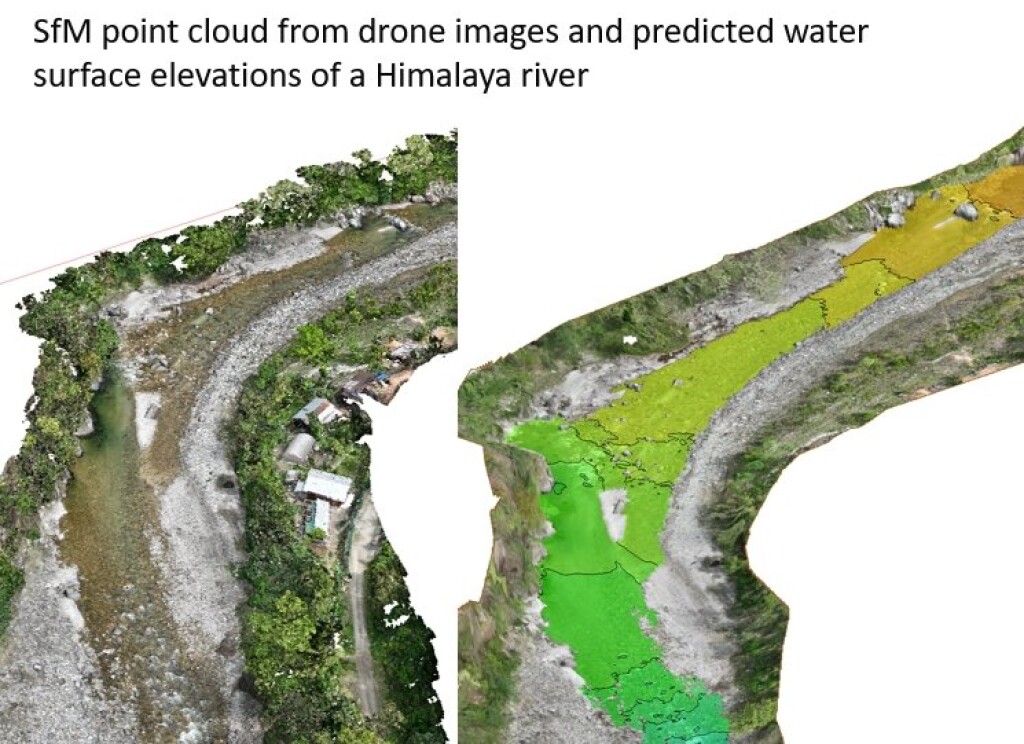
For nearly a decade, SJE has been applying advanced surveying technologies to capture riverbed topography. Using drone-based photogrammetry and Structure-from-Motion (SfM) techniques, high-resolution three-dimensional models of riverbeds can be reconstructed from aerial imagery, providing a detailed representation of complex riverine environments.
SJE innovative approach, coupling hydrodynamic modelling with SfM, enables the correction of refraction-induced distortions in submerged riverbed surfaces. This technique allows SJE team to generate highly detailed digital elevation models (DEMs) with spatial resolutions as fine as 2 cm. These datasets provide a reliable foundation for precise hydrodynamic and ecohydraulic modelling, particularly for environmental flow (e-flow) assessments, where small-scale variations in riverbed geometry can significantly influence flow patterns and aquatic habitat conditions.
Turning river dynamics into knowledge
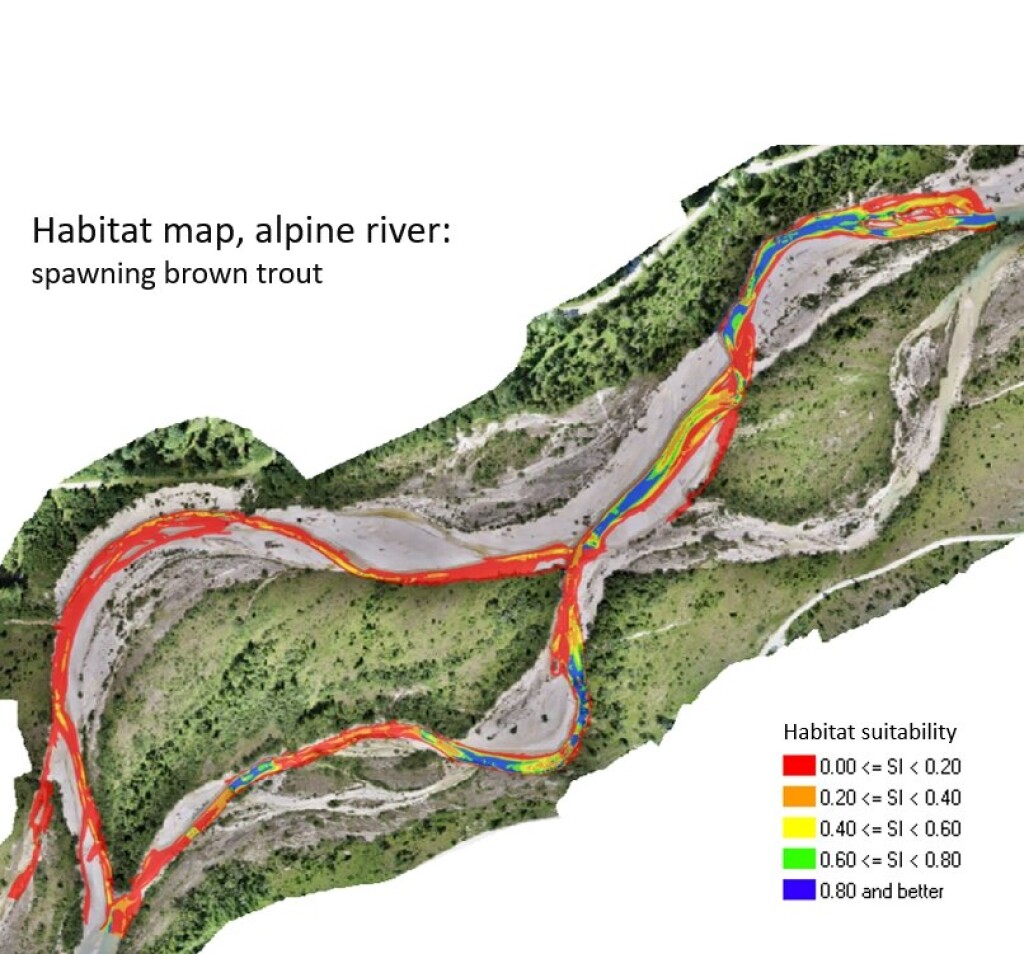
A major pillar of SJE's work is CASiMiR, a fuzzy-logic based modelling system, originating from the research of Klaus Jorde and Matthias Schneider in the late 1990s and early 2000s. It is designed to investigate river habitats and evaluate the ecological effects of river-management interventions. Hydraulic data describing water depth, velocity, morphology and flow patterns are transformed into information about habitat suitability and potential migration pathways. The modelling provides engineers and ecologists with a detailed representation of how fish may experience a particular river reach in terms of e.g. habitat suitability maps.
SJE continuously develops and expands the capabilities and fields of application of CASiMiR, combining methodological innovation with practical implementation in river-management projects worldwide. Through international cooperation, training and capacity-building activities, the company supports the transfer of ecohydraulic modelling expertise, enabling practitioners around the world to apply CASiMiR independently.
CASiMiR-based habitat modelling is particularly relevant to environmental flow (e-flow) assessments, where the ecological consequences of different flow regimes must be evaluated to support sustainable water-resource management. The approach is recognized in official environmental-flow guidance, including Bavaria's recommendations for minimum-flow assessments and Bhutan's national environmental-flow guidelines. By providing a scientifically grounded basis for assessing ecological flow requirements, CASiMiR also supports the broader environmental and sustainability objectives promoted by international development institutions, including the World Bank and the Asian Development Bank.
Experience directly connected to the River Inn
SJE has already applied its ecohydraulic expertise to projects on the River Inn in Austria, providing experience closely related to the ecological challenges addressed by DANUBElifelines further downstream in Germany.
At the Runserau fish-passage project, the company analysed how migrating fish would approach and locate the entrance of a planned fish passage. Hydrodynamic simulations and migration modelling were used to explore potential movement corridors and evaluate the effectiveness of guiding flows.
At the Kirchbichl hydropower project, SJE contributed to a broader assessment involving migration connectivity, habitat quality and hydraulic conditions. The project illustrates how hydropower infrastructure, fish migration and ecological river management increasingly need to be addressed within the same analytical framework.
SJE investigated the effects of hydropeaking in four additional stretches of the River Inn. The studies focused on rapid up- and downramping caused by peak hydropower production. They also assessed the effectiveness of diverting peak flows into a tunnel as a mitigation measure associated with the Gemeinschaftskraftwerk Inn hydropower project on the Swiss-Austrian border.
In addition, SJE and its Austrian partners Scheiber Ziviltechniker GmbH and H&S Limnologie GmbH [IK1] [AC2] have conducted environmental flow (E-Flow) and hydropeaking impact studies at 6 other Inn-stretches as well as on numerous Inn-tributaries, combining innovative SfM-based bathymetric surveys with CASiMiR habitat modelling. Tributaries are essential components of the wider river ecosystem, providing important spawning and nursery habitats, contributing water and sediment to the main river, and supporting ecological connectivity throughout the catchment. Understanding and preserving these functions is crucial for the ecological integrity and long-term resilience of the River Inn as a connected river system.
Together, these investigations demonstrate SJE’s extensive involvement in ecohydraulic studies along the River Inn and the broad application of CASiMiR, one of the company’s core modelling tools. They highlight how hydraulic and habitat modelling can be combined to assess hydropower impacts, environmental flows and sediment management across an entire river system.
A strong connection with the DANUBElifelines Inn demo site
The German section of the Inn represents one of the demonstration sites of the DANUBElifelines project, where researchers investigate fish movement, habitat use and the ecological effectiveness of restoration measures.
The river has experienced extensive modification through flood protection, land reclamation and hydropower development. Formerly braided sections have become more channelised, while longitudinal and lateral connectivity have been reduced in many areas.
Species such as Danube salmon, European grayling and several cyprinids depend on suitable migration routes and access to spawning, feeding and refuge habitats. Restoring ecological connectivity therefore requires both physical interventions and detailed knowledge about the hydraulic conditions experienced by these species.
Bridging research, education and engineering practice
One of the distinctive characteristics of SJE is its close relationship with academic research and education and its commitment to transferring scientific advances into engineering practice.
SJE actively participates in national and European research projects dedicated to sustainable river management, aquatic ecosystem protection and environmentally responsible hydropower development. These include the EU-funded projects HYDRO4U, focusing on sustainable hydropower solutions in Central Asia, FIThydro, investigating the ecological impacts of hydropower, and RIBES, advancing research on fish behaviour and river connectivity. German-funded projects such as RETERO and OptiPass further contribute to developing innovative methods for fish protection, understanding fish behaviour and improving downstream migration at hydropower facilities. Beyond its research activities, SJE is strongly committed to educating and supporting the next generation of engineers and scientists. The company contributes to the supervision and mentoring of Master's students and doctoral researchers in cooperation with universities and research institutions.
Local expertise with worldwide relevance
DANUBElifelines extends far beyond the River Inn, connecting demonstration sites across the Danube River Basin and developing restoration knowledge that is intended to be transferable between river systems.
Experience gained from fish migration modelling on an Alpine river may therefore contribute to restoration strategies elsewhere. Approaches developed for attraction-flow assessment, habitat evaluation or fish-passage optimisation may become relevant for other rivers facing similar connectivity challenges. That such habitat-related approaches are of high relevance for water management is shown by the fact that CASiMiR builds the backbone of the E-Flow guideline for Bhutan in the Himalaya. A country which is known for giving a high priority to environment as part of the National gross happiness.
SJE team bring these largely invisible processes into the decision-making process. Their work demonstrates how specialised business expertise reflects a wider European ambition: restoring river connectivity while creating a stronger understanding of how infrastructure and ecological processes interact.
For the DANUBElifelines Business Club, SJE Ecohydraulic Engineering GmbH represents a compelling example of a Local Business Hero whose expertise connects scientific knowledge, innovative modelling and practical river engineering with the shared objective of healthier and more connected river ecosystems.