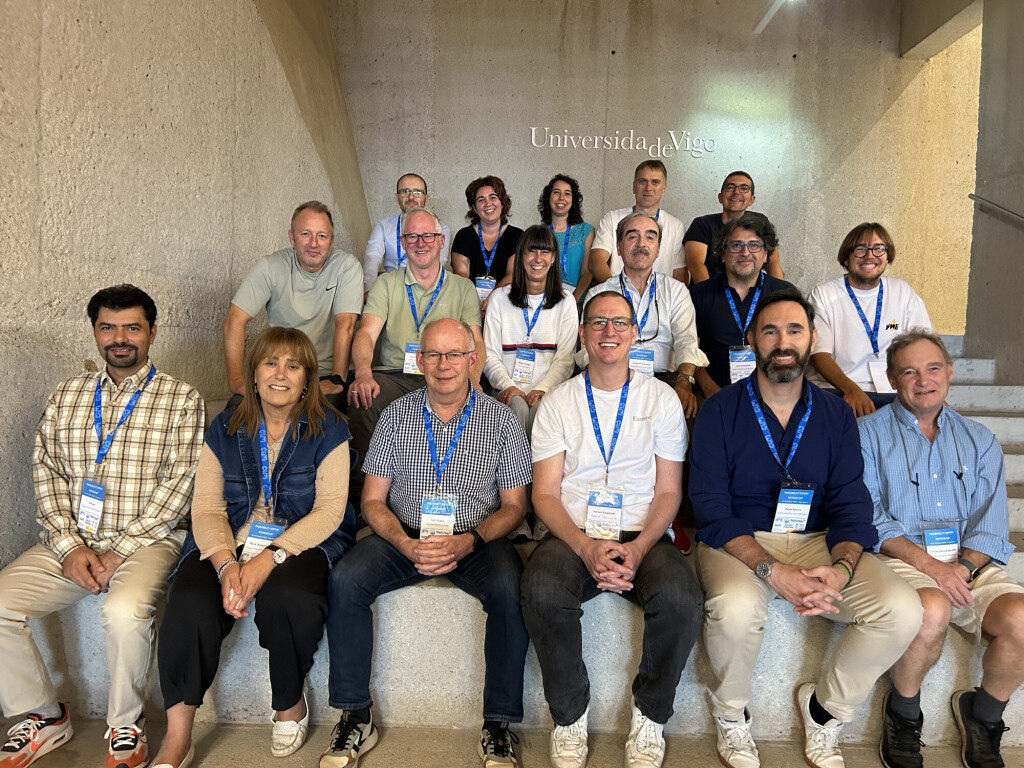
On October 14–15, specialists from seven countries gathered in Vigo to accelerate the development of new methods for evaluating the passability of river barriers. The workshop, titled “Barrier Passability Expert Workshop,” was organised by the Marine Research Center (CIM) of the University of Vigo and coordinated by researcher Carlos García de Leaniz. Its objective was to find more efficient ways to assess how easily fish can pass different types of barriers — and to identify which structures, if removed or modified, could generate the greatest positive impact on aquatic ecosystems. This international meeting brought together 20 experts in migratory fish from the United States, the United Kingdom, Austria, the Netherlands, Hungary, Portugal, and Spain, all working on applying artificial intelligence to river and fish conservation.
During the workshop, Prof. García de Leaniz underlined that the European Nature Restoration Law obliges EU member states to reconnect 25,000 kilometres of free-flowing rivers by 2030. He stressed that effective restoration of river connectivity depends on the ability to prioritise which barriers should be removed or adapted. To do this, it is essential to estimate the passability of each barrier — something that is, as he noted, “notoriously complex,” because it varies according to the characteristics of the barrier, local environmental conditions, and differences between species as well as individual fish.
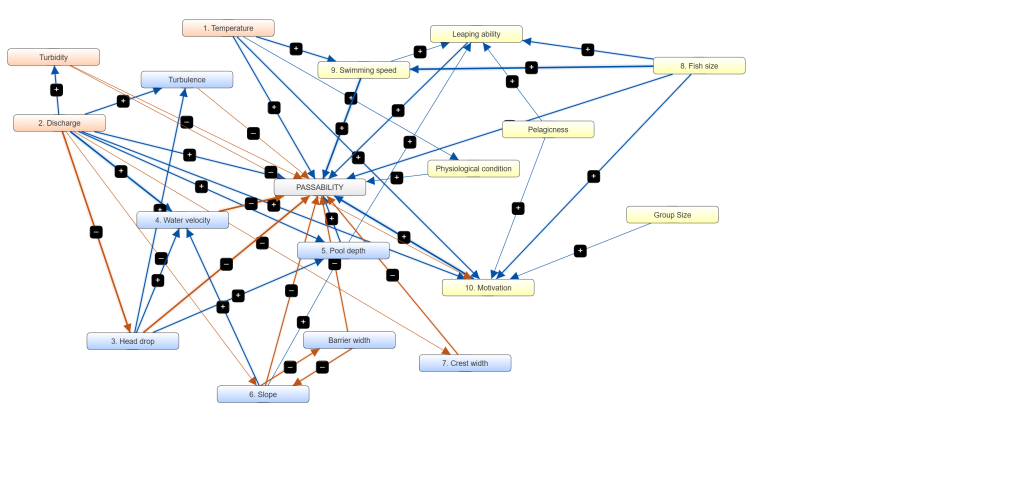
Over the course of the meeting, participants created fuzzy cognitive maps based on expert evaluations. These maps help identify the key factors that determine whether a barrier is passable for different species. The workshop also explored the potential of artificial intelligence models to estimate passability using photographic records. Approaches such as computer vision techniques and fuzzy logic were discussed as promising tools for improving assessment accuracy and scalability.
Researchers contributing to the workshop came from a wide range of renowned institutions, including Oregon State University (USA), Swansea University, the University of Southampton and the University of Kent (UK), BOKU University (Austria), Deltares (Netherlands), BLRI (Hungary), and the University of Lisbon (Portugal). They were joined by scientists from the University of Vigo, the Institute of Marine Research (IIM-CSIC), the Doñana Biological Station (EBD), and the University of Valladolid.
The event was sponsored by the DANUBElifelines project, the Spanish Ministry of Science, Innovation and Universities – State Research Agency, the company Naturgy, and the FreeFlowLab group at CIM-University of Vigo and Swansea University.
